AI Image Generators

Explore the best AI Image Generators — independent reviews, comparisons, pricing and step-by-step how-to guides, curated by Aizhi.

  • Inverse depth parametrization

    Inverse depth parametrization

    In computer vision, the inverse depth parametrization is a parametrization used in methods for 3D reconstruction from multiple images such as simultaneous localization and mapping (SLAM). Given a point p {\displaystyle \mathbf {p} } in 3D space observed by a monocular pinhole camera from multiple views, the inverse depth parametrization of the point's position is a 6D vector that encodes the optical centre of the camera c 0 {\displaystyle \mathbf {c} _{0}} when in first observed the point, and the position of the point along the ray passing through p {\displaystyle \mathbf {p} } and c 0 {\displaystyle \mathbf {c} _{0}} . Inverse depth parametrization generally improves numerical stability and allows to represent points with zero parallax. Moreover, the error associated to the observation of the point's position can be modelled with a Gaussian distribution when expressed in inverse depth. This is an important property required to apply methods, such as Kalman filters, that assume normality of the measurement error distribution. The major drawback is the larger memory consumption, since the dimensionality of the point's representation is doubled. == Definition == Given 3D point p = ( x , y , z ) {\displaystyle \mathbf {p} =(x,y,z)} with world coordinates in a reference frame ( e 1 , e 2 , e 3 ) {\displaystyle (e_{1},e_{2},e_{3})} , observed from different views, the inverse depth parametrization y {\displaystyle \mathbf {y} } of p {\displaystyle \mathbf {p} } is given by: y = ( x 0 , y 0 , z 0 , θ , ϕ , ρ ) {\displaystyle \mathbf {y} =(x_{0},y_{0},z_{0},\theta ,\phi ,\rho )} where the first five components encode the camera pose in the first observation of the point, being c 0 = ( x 0 , y 0 , z 0 ) {\displaystyle \mathbf {c_{0}} =(x_{0},y_{0},z_{0})} the optical centre, ϕ {\displaystyle \phi } the azimuth, θ {\displaystyle \theta } the elevation angle, and ρ = 1 ‖ p − c 0 ‖ {\displaystyle \rho ={\frac {1}{\left\Vert \mathbf {p} -\mathbf {c} _{0}\right\Vert }}} the inverse depth of p {\displaystyle p} at the first observation.

    Read more →
  • Proximal gradient methods for learning

    Proximal gradient methods for learning

    Proximal gradient (forward backward splitting) methods for learning is an area of research in optimization and statistical learning theory which studies algorithms for a general class of convex regularization problems where the regularization penalty may not be differentiable. One such example is ℓ 1 {\displaystyle \ell _{1}} regularization (also known as Lasso) of the form min w ∈ R d 1 n ∑ i = 1 n ( y i − ⟨ w , x i ⟩ ) 2 + λ ‖ w ‖ 1 , where x i ∈ R d and y i ∈ R . {\displaystyle \min _{w\in \mathbb {R} ^{d}}{\frac {1}{n}}\sum _{i=1}^{n}(y_{i}-\langle w,x_{i}\rangle )^{2}+\lambda \|w\|_{1},\quad {\text{ where }}x_{i}\in \mathbb {R} ^{d}{\text{ and }}y_{i}\in \mathbb {R} .} Proximal gradient methods offer a general framework for solving regularization problems from statistical learning theory with penalties that are tailored to a specific problem application. Such customized penalties can help to induce certain structure in problem solutions, such as sparsity (in the case of lasso) or group structure (in the case of group lasso). == Relevant background == Proximal gradient methods are applicable in a wide variety of scenarios for solving convex optimization problems of the form min x ∈ H F ( x ) + R ( x ) , {\displaystyle \min _{x\in {\mathcal {H}}}F(x)+R(x),} where F {\displaystyle F} is convex and differentiable with Lipschitz continuous gradient, R {\displaystyle R} is a convex, lower semicontinuous function which is possibly nondifferentiable, and H {\displaystyle {\mathcal {H}}} is some set, typically a Hilbert space. The usual criterion of x {\displaystyle x} minimizes F ( x ) + R ( x ) {\displaystyle F(x)+R(x)} if and only if ∇ ( F + R ) ( x ) = 0 {\displaystyle \nabla (F+R)(x)=0} in the convex, differentiable setting is now replaced by 0 ∈ ∂ ( F + R ) ( x ) , {\displaystyle 0\in \partial (F+R)(x),} where ∂ φ {\displaystyle \partial \varphi } denotes the subdifferential of a real-valued, convex function φ {\displaystyle \varphi } . Given a convex function φ : H → R {\displaystyle \varphi :{\mathcal {H}}\to \mathbb {R} } an important operator to consider is its proximal operator prox φ : H → H {\displaystyle \operatorname {prox} _{\varphi }:{\mathcal {H}}\to {\mathcal {H}}} defined by prox φ ⁡ ( u ) = arg ⁡ min x ∈ H φ ( x ) + 1 2 ‖ u − x ‖ 2 2 , {\displaystyle \operatorname {prox} _{\varphi }(u)=\operatorname {arg} \min _{x\in {\mathcal {H}}}\varphi (x)+{\frac {1}{2}}\|u-x\|_{2}^{2},} which is well-defined because of the strict convexity of the ℓ 2 {\displaystyle \ell _{2}} norm. The proximal operator can be seen as a generalization of a projection. We see that the proximity operator is important because x ∗ {\displaystyle x^{}} is a minimizer to the problem min x ∈ H F ( x ) + R ( x ) {\displaystyle \min _{x\in {\mathcal {H}}}F(x)+R(x)} if and only if x ∗ = prox γ R ⁡ ( x ∗ − γ ∇ F ( x ∗ ) ) , {\displaystyle x^{}=\operatorname {prox} _{\gamma R}\left(x^{}-\gamma \nabla F(x^{})\right),} where γ > 0 {\displaystyle \gamma >0} is any positive real number. === Moreau decomposition === One important technique related to proximal gradient methods is the Moreau decomposition, which decomposes the identity operator as the sum of two proximity operators. Namely, let φ : X → R {\displaystyle \varphi :{\mathcal {X}}\to \mathbb {R} } be a lower semicontinuous, convex function on a vector space X {\displaystyle {\mathcal {X}}} . We define its Fenchel conjugate φ ∗ : X → R {\displaystyle \varphi ^{}:{\mathcal {X}}\to \mathbb {R} } to be the function φ ∗ ( u ) := sup x ∈ X ⟨ x , u ⟩ − φ ( x ) . {\displaystyle \varphi ^{}(u):=\sup _{x\in {\mathcal {X}}}\langle x,u\rangle -\varphi (x).} The general form of Moreau's decomposition states that for any x ∈ X {\displaystyle x\in {\mathcal {X}}} and any γ > 0 {\displaystyle \gamma >0} that x = prox γ φ ⁡ ( x ) + γ prox φ ∗ / γ ⁡ ( x / γ ) , {\displaystyle x=\operatorname {prox} _{\gamma \varphi }(x)+\gamma \operatorname {prox} _{\varphi ^{}/\gamma }(x/\gamma ),} which for γ = 1 {\displaystyle \gamma =1} implies that x = prox φ ⁡ ( x ) + prox φ ∗ ⁡ ( x ) {\displaystyle x=\operatorname {prox} _{\varphi }(x)+\operatorname {prox} _{\varphi ^{}}(x)} . The Moreau decomposition can be seen to be a generalization of the usual orthogonal decomposition of a vector space, analogous with the fact that proximity operators are generalizations of projections. In certain situations it may be easier to compute the proximity operator for the conjugate φ ∗ {\displaystyle \varphi ^{}} instead of the function φ {\displaystyle \varphi } , and therefore the Moreau decomposition can be applied. This is the case for group lasso. == Lasso regularization == Consider the regularized empirical risk minimization problem with square loss and with the ℓ 1 {\displaystyle \ell _{1}} norm as the regularization penalty: min w ∈ R d 1 n ∑ i = 1 n ( y i − ⟨ w , x i ⟩ ) 2 + λ ‖ w ‖ 1 , {\displaystyle \min _{w\in \mathbb {R} ^{d}}{\frac {1}{n}}\sum _{i=1}^{n}(y_{i}-\langle w,x_{i}\rangle )^{2}+\lambda \|w\|_{1},} where x i ∈ R d and y i ∈ R . {\displaystyle x_{i}\in \mathbb {R} ^{d}{\text{ and }}y_{i}\in \mathbb {R} .} The ℓ 1 {\displaystyle \ell _{1}} regularization problem is sometimes referred to as lasso (least absolute shrinkage and selection operator). Such ℓ 1 {\displaystyle \ell _{1}} regularization problems are interesting because they induce sparse solutions, that is, solutions w {\displaystyle w} to the minimization problem have relatively few nonzero components. Lasso can be seen to be a convex relaxation of the non-convex problem min w ∈ R d 1 n ∑ i = 1 n ( y i − ⟨ w , x i ⟩ ) 2 + λ ‖ w ‖ 0 , {\displaystyle \min _{w\in \mathbb {R} ^{d}}{\frac {1}{n}}\sum _{i=1}^{n}(y_{i}-\langle w,x_{i}\rangle )^{2}+\lambda \|w\|_{0},} where ‖ w ‖ 0 {\displaystyle \|w\|_{0}} denotes the ℓ 0 {\displaystyle \ell _{0}} "norm", which is the number of nonzero entries of the vector w {\displaystyle w} . Sparse solutions are of particular interest in learning theory for interpretability of results: a sparse solution can identify a small number of important factors. === Solving for L1 proximity operator === For simplicity we restrict our attention to the problem where λ = 1 {\displaystyle \lambda =1} . To solve the problem min w ∈ R d 1 n ∑ i = 1 n ( y i − ⟨ w , x i ⟩ ) 2 + ‖ w ‖ 1 , {\displaystyle \min _{w\in \mathbb {R} ^{d}}{\frac {1}{n}}\sum _{i=1}^{n}(y_{i}-\langle w,x_{i}\rangle )^{2}+\|w\|_{1},} we consider our objective function in two parts: a convex, differentiable term F ( w ) = 1 n ∑ i = 1 n ( y i − ⟨ w , x i ⟩ ) 2 {\displaystyle F(w)={\frac {1}{n}}\sum _{i=1}^{n}(y_{i}-\langle w,x_{i}\rangle )^{2}} and a convex function R ( w ) = ‖ w ‖ 1 {\displaystyle R(w)=\|w\|_{1}} . Note that R {\displaystyle R} is not strictly convex. Let us compute the proximity operator for R ( w ) {\displaystyle R(w)} . First we find an alternative characterization of the proximity operator prox R ⁡ ( x ) {\displaystyle \operatorname {prox} _{R}(x)} as follows: u = prox R ⁡ ( x ) ⟺ 0 ∈ ∂ ( R ( u ) + 1 2 ‖ u − x ‖ 2 2 ) ⟺ 0 ∈ ∂ R ( u ) + u − x ⟺ x − u ∈ ∂ R ( u ) . {\displaystyle {\begin{aligned}u=\operatorname {prox} _{R}(x)\iff &0\in \partial \left(R(u)+{\frac {1}{2}}\|u-x\|_{2}^{2}\right)\\\iff &0\in \partial R(u)+u-x\\\iff &x-u\in \partial R(u).\end{aligned}}} For R ( w ) = ‖ w ‖ 1 {\displaystyle R(w)=\|w\|_{1}} it is easy to compute ∂ R ( w ) {\displaystyle \partial R(w)} : the i {\displaystyle i} th entry of ∂ R ( w ) {\displaystyle \partial R(w)} is precisely ∂ | w i | = { 1 , w i > 0 − 1 , w i < 0 [ − 1 , 1 ] , w i = 0. {\displaystyle \partial |w_{i}|={\begin{cases}1,&w_{i}>0\\-1,&w_{i}<0\\\left[-1,1\right],&w_{i}=0.\end{cases}}} Using the recharacterization of the proximity operator given above, for the choice of R ( w ) = ‖ w ‖ 1 {\displaystyle R(w)=\|w\|_{1}} and γ > 0 {\displaystyle \gamma >0} we have that prox γ R ⁡ ( x ) {\displaystyle \operatorname {prox} _{\gamma R}(x)} is defined entrywise by ( prox γ R ⁡ ( x ) ) i = { x i − γ , x i > γ 0 , | x i | ≤ γ x i + γ , x i < − γ , {\displaystyle \left(\operatorname {prox} _{\gamma R}(x)\right)_{i}={\begin{cases}x_{i}-\gamma ,&x_{i}>\gamma \\0,&|x_{i}|\leq \gamma \\x_{i}+\gamma ,&x_{i}<-\gamma ,\end{cases}}} which is known as the soft thresholding operator S γ ( x ) = prox γ ‖ ⋅ ‖ 1 ⁡ ( x ) {\displaystyle S_{\gamma }(x)=\operatorname {prox} _{\gamma \|\cdot \|_{1}}(x)} . === Fixed point iterative schemes === To finally solve the lasso problem we consider the fixed point equation shown earlier: x ∗ = prox γ R ⁡ ( x ∗ − γ ∇ F ( x ∗ ) ) . {\displaystyle x^{}=\operatorname {prox} _{\gamma R}\left(x^{}-\gamma \nabla F(x^{})\right).} Given that we have computed the form of the proximity operator explicitly, then we can define a standard fixed point iteration procedure. Namely, fix some initial w 0 ∈ R d {\displaystyle w^{0}\in \mathbb {R} ^{d}} , and for k = 1 , 2 , … {\displaystyle k=1,2,\ldots } define w k + 1 = S γ ( w k − γ ∇ F ( w k ) ) . {\displaystyle w^{k+1}=S_{\gamma }\left(w^{k}-\gamma \nabla F\l

    Read more →
  • Situated

    Situated

    In artificial intelligence and cognitive science, the term situated refers to an agent which is embedded in an environment. The term situated is commonly used to refer to robots, but some researchers argue that software agents can also be situated if: they exist in a dynamic (rapidly changing) environment, which they can manipulate or change through their actions, and which they can sense or perceive. Examples might include web-based agents, which can alter data or trigger processes (such as purchases) over the internet, or virtual-reality bots which inhabit and change virtual worlds, such as Second Life. Being situated is generally considered to be part of being embodied, but it is useful to consider each perspective individually. The situated perspective emphasizes that intelligent behaviour derives from the environment and the agent's interactions with it. The nature of these interactions are defined by an agent's embodiment.

    Read more →
  • Algorithmic inference

    Algorithmic inference

    Algorithmic inference gathers new developments in the statistical inference methods made feasible by the powerful computing devices widely available to any data analyst. Cornerstones in this field are computational learning theory, granular computing, bioinformatics, and, long ago, structural probability (Fraser 1966). The main focus is on the algorithms which compute statistics rooting the study of a random phenomenon, along with the amount of data they must feed on to produce reliable results. This shifts the interest of mathematicians from the study of the distribution laws to the functional properties of the statistics, and the interest of computer scientists from the algorithms for processing data to the information they process. == The Fisher parametric inference problem == Concerning the identification of the parameters of a distribution law, the mature reader may recall lengthy disputes in the mid 20th century about the interpretation of their variability in terms of fiducial distribution (Fisher 1956), structural probabilities (Fraser 1966), priors/posteriors (Ramsey 1925), and so on. From an epistemology viewpoint, this entailed a companion dispute as to the nature of probability: is it a physical feature of phenomena to be described through random variables or a way of synthesizing data about a phenomenon? Opting for the latter, Fisher defines a fiducial distribution law of parameters of a given random variable that he deduces from a sample of its specifications. With this law he computes, for instance "the probability that μ (mean of a Gaussian variable – omeur note) is less than any assigned value, or the probability that it lies between any assigned values, or, in short, its probability distribution, in the light of the sample observed". == The classic solution == Fisher fought hard to defend the difference and superiority of his notion of parameter distribution in comparison to analogous notions, such as Bayes' posterior distribution, Fraser's constructive probability and Neyman's confidence intervals. For half a century, Neyman's confidence intervals won out for all practical purposes, crediting the phenomenological nature of probability. With this perspective, when you deal with a Gaussian variable, its mean μ is fixed by the physical features of the phenomenon you are observing, where the observations are random operators, hence the observed values are specifications of a random sample. Because of their randomness, you may compute from the sample specific intervals containing the fixed μ with a given probability that you denote confidence. === Example === Let X be a Gaussian variable with parameters μ {\displaystyle \mu } and σ 2 {\displaystyle \sigma ^{2}} and { X 1 , … , X m } {\displaystyle \{X_{1},\ldots ,X_{m}\}} a sample drawn from it. Working with statistics S μ = ∑ i = 1 m X i {\displaystyle S_{\mu }=\sum _{i=1}^{m}X_{i}} and S σ 2 = ∑ i = 1 m ( X i − X ¯ ) 2 , where X ¯ = S μ m {\displaystyle S_{\sigma ^{2}}=\sum _{i=1}^{m}(X_{i}-{\overline {X}})^{2},{\text{ where }}{\overline {X}}={\frac {S_{\mu }}{m}}} is the sample mean, we recognize that T = S μ − m μ S σ 2 m − 1 m = X ¯ − μ S σ 2 / ( m ( m − 1 ) ) {\displaystyle T={\frac {S_{\mu }-m\mu }{\sqrt {S_{\sigma ^{2}}}}}{\sqrt {\frac {m-1}{m}}}={\frac {{\overline {X}}-\mu }{\sqrt {S_{\sigma ^{2}}/(m(m-1))}}}} follows a Student's t distribution (Wilks 1962) with parameter (degrees of freedom) m − 1, so that f T ( t ) = Γ ( m / 2 ) Γ ( ( m − 1 ) / 2 ) 1 π ( m − 1 ) ( 1 + t 2 m − 1 ) m / 2 . {\displaystyle f_{T}(t)={\frac {\Gamma (m/2)}{\Gamma ((m-1)/2)}}{\frac {1}{\sqrt {\pi (m-1)}}}\left(1+{\frac {t^{2}}{m-1}}\right)^{m/2}.} Gauging T between two quantiles and inverting its expression as a function of μ {\displaystyle \mu } you obtain confidence intervals for μ {\displaystyle \mu } . With the sample specification: x = { 7.14 , 6.3 , 3.9 , 6.46 , 0.2 , 2.94 , 4.14 , 4.69 , 6.02 , 1.58 } {\displaystyle \mathbf {x} =\{7.14,6.3,3.9,6.46,0.2,2.94,4.14,4.69,6.02,1.58\}} having size m = 10, you compute the statistics s μ = 43.37 {\displaystyle s_{\mu }=43.37} and s σ 2 = 46.07 {\displaystyle s_{\sigma ^{2}}=46.07} , and obtain a 0.90 confidence interval for μ {\displaystyle \mu } with extremes (3.03, 5.65). == Inferring functions with the help of a computer == From a modeling perspective the entire dispute looks like a chicken-egg dilemma: either fixed data by first and probability distribution of their properties as a consequence, or fixed properties by first and probability distribution of the observed data as a corollary. The classic solution has one benefit and one drawback. The former was appreciated particularly back when people still did computations with sheet and pencil. Per se, the task of computing a Neyman confidence interval for the fixed parameter θ is hard: you do not know θ, but you look for disposing around it an interval with a possibly very low probability of failing. The analytical solution is allowed for a very limited number of theoretical cases. Vice versa a large variety of instances may be quickly solved in an approximate way via the central limit theorem in terms of confidence interval around a Gaussian distribution – that's the benefit. The drawback is that the central limit theorem is applicable when the sample size is sufficiently large. Therefore, it is less and less applicable with the sample involved in modern inference instances. The fault is not in the sample size on its own part. Rather, this size is not sufficiently large because of the complexity of the inference problem. With the availability of large computing facilities, scientists refocused from isolated parameters inference to complex functions inference, i.e. re sets of highly nested parameters identifying functions. In these cases we speak about learning of functions (in terms for instance of regression, neuro-fuzzy system or computational learning) on the basis of highly informative samples. A first effect of having a complex structure linking data is the reduction of the number of sample degrees of freedom, i.e. the burning of a part of sample points, so that the effective sample size to be considered in the central limit theorem is too small. Focusing on the sample size ensuring a limited learning error with a given confidence level, the consequence is that the lower bound on this size grows with complexity indices such as VC dimension or detail of a class to which the function we want to learn belongs. === Example === A sample of 1,000 independent bits is enough to ensure an absolute error of at most 0.081 on the estimation of the parameter p of the underlying Bernoulli variable with a confidence of at least 0.99. The same size cannot guarantee a threshold less than 0.088 with the same confidence 0.99 when the error is identified with the probability that a 20-year-old man living in New York does not fit the ranges of height, weight and waistline observed on 1,000 Big Apple inhabitants. The accuracy shortage occurs because both the VC dimension and the detail of the class of parallelepipeds, among which the one observed from the 1,000 inhabitants' ranges falls, are equal to 6. == The general inversion problem solving the Fisher question == With insufficiently large samples, the approach: fixed sample – random properties suggests inference procedures in three steps: === Definition === For a random variable and a sample drawn from it a compatible distribution is a distribution having the same sampling mechanism M X = ( Z , g θ ) {\displaystyle {\mathcal {M}}_{X}=(Z,g_{\boldsymbol {\theta }})} of X with a value θ {\displaystyle {\boldsymbol {\theta }}} of the random parameter Θ {\displaystyle \mathbf {\Theta } } derived from a master equation rooted on a well-behaved statistic s. === Example === You may find the distribution law of the Pareto parameters A and K as an implementation example of the population bootstrap method as in the figure on the left. Implementing the twisting argument method, you get the distribution law F M ( μ ) {\displaystyle F_{M}(\mu )} of the mean M of a Gaussian variable X on the basis of the statistic s M = ∑ i = 1 m x i {\textstyle s_{M}=\sum _{i=1}^{m}x_{i}} when Σ 2 {\displaystyle \Sigma ^{2}} is known to be equal to σ 2 {\displaystyle \sigma ^{2}} (Apolloni, Malchiodi & Gaito 2006). Its expression is: F M ( μ ) = Φ ( m μ − s M σ m ) , {\displaystyle F_{M}(\mu )=\Phi {\left({\frac {m\mu -s_{M}}{\sigma {\sqrt {m}}}}\right)},} shown in the figure on the right, where Φ {\displaystyle \Phi } is the cumulative distribution function of a standard normal distribution. Computing a confidence interval for M given its distribution function is straightforward: we need only find two quantiles (for instance δ / 2 {\displaystyle \delta /2} and 1 − δ / 2 {\displaystyle 1-\delta /2} quantiles in case we are interested in a confidence interval of level δ symmetric in the tail's probabilities) as indicated on the left in the diagram showing the behavior of

    Read more →
  • Mooky (app)

    Mooky (app)

    Mooky was a location-based social and dating application, designed to help its users to find the perfect match by providing a large scale of filters. Mooky was free of charge. The app made use of mobile devices' geolocation, a feature of smart phones and other devices which allows users to locate other users who are nearby. == History == Mooky was published on Google Play on April 17, 2016, by Mooky BV. The latest version of this application was version 1.0.6. == Overview == === How it works === Mooky used Facebook to build a user profile with photos and basic information, like the user's surname and age. From there on the user had to fill in their Mooky profile, which contains information about the user's height, posture, hair color, eye color, ethnicity and religion. After this the user could select its preferences to find matches nearby. === User verification === Mooky asked their users to take a selfie holding a piece of paper saying 'Mooky'. Mooky would then manually accept or decline the user verification.

    Read more →
  • AIXI

    AIXI

    AIXI is a theoretical mathematical formalism for artificial general intelligence. It combines Solomonoff induction with sequential decision theory. AIXI was first proposed by Marcus Hutter in 2000 and several results regarding AIXI are proved in Hutter's 2005 book Universal Artificial Intelligence. AIXI is a reinforcement learning (RL) agent. It maximizes the expected total rewards received from the environment. Intuitively, it simultaneously considers every computable hypothesis (or environment). In each time step, it looks at every possible program and evaluates how many rewards that program generates depending on the next action taken. The promised rewards are then weighted by the subjective belief that this program constitutes the true environment. This belief is computed from the length of the program: longer programs are considered less likely, in line with Occam's razor. AIXI then selects the action that has the highest expected total reward in the weighted sum of all these programs. == Etymology == According to Hutter, the word "AIXI" can have several interpretations. AIXI can stand for AI based on Solomonoff's distribution, denoted by ξ {\displaystyle \xi } (which is the Greek letter xi), or e.g. it can stand for AI "crossed" (X) with induction (I). There are other interpretations. == Definition == AIXI is a reinforcement learning agent that interacts with some stochastic and unknown but computable environment μ {\displaystyle \mu } . The interaction proceeds in time steps, from t = 1 {\displaystyle t=1} to t = m {\displaystyle t=m} , where m ∈ N {\displaystyle m\in \mathbb {N} } is the lifespan of the AIXI agent. At time step t, the agent chooses an action a t ∈ A {\displaystyle a_{t}\in {\mathcal {A}}} (e.g. a limb movement) and executes it in the environment, and the environment responds with a "percept" e t ∈ E = O × R {\displaystyle e_{t}\in {\mathcal {E}}={\mathcal {O}}\times \mathbb {R} } , which consists of an "observation" o t ∈ O {\displaystyle o_{t}\in {\mathcal {O}}} (e.g., a camera image) and a reward r t ∈ R {\displaystyle r_{t}\in \mathbb {R} } , distributed according to the conditional probability μ ( o t r t | a 1 o 1 r 1 . . . a t − 1 o t − 1 r t − 1 a t ) {\displaystyle \mu (o_{t}r_{t}|a_{1}o_{1}r_{1}...a_{t-1}o_{t-1}r_{t-1}a_{t})} , where a 1 o 1 r 1 . . . a t − 1 o t − 1 r t − 1 a t {\displaystyle a_{1}o_{1}r_{1}...a_{t-1}o_{t-1}r_{t-1}a_{t}} is the "history" of actions, observations and rewards. The environment μ {\displaystyle \mu } is thus mathematically represented as a probability distribution over "percepts" (observations and rewards) which depend on the full history, so there is no Markov assumption (as opposed to other RL algorithms). Note again that this probability distribution is unknown to the AIXI agent. Furthermore, note again that μ {\displaystyle \mu } is computable, that is, the observations and rewards received by the agent from the environment μ {\displaystyle \mu } can be computed by some program (which runs on a Turing machine), given the past actions of the AIXI agent. The only goal of the AIXI agent is to maximize ∑ t = 1 m r t {\displaystyle \sum _{t=1}^{m}r_{t}} , that is, the sum of rewards from time step 1 to m. The AIXI agent is associated with a stochastic policy π : ( A × E ) ∗ → A {\displaystyle \pi :({\mathcal {A}}\times {\mathcal {E}})^{}\rightarrow {\mathcal {A}}} , which is the function it uses to choose actions at every time step, where A {\displaystyle {\mathcal {A}}} is the space of all possible actions that AIXI can take and E {\displaystyle {\mathcal {E}}} is the space of all possible "percepts" that can be produced by the environment. The environment (or probability distribution) μ {\displaystyle \mu } can also be thought of as a stochastic policy (which is a function): μ : ( A × E ) ∗ × A → E {\displaystyle \mu :({\mathcal {A}}\times {\mathcal {E}})^{}\times {\mathcal {A}}\rightarrow {\mathcal {E}}} , where the ∗ {\displaystyle } is the Kleene star operation. In general, at time step t {\displaystyle t} (which ranges from 1 to m), AIXI, having previously executed actions a 1 … a t − 1 {\displaystyle a_{1}\dots a_{t-1}} (which is often abbreviated in the literature as a < t {\displaystyle a_{ Read more →

  • Deep Learning Super Sampling

    Deep Learning Super Sampling

    Deep Learning Super Sampling (DLSS) is a suite of real-time deep learning image enhancement and upscaling technologies developed by Nvidia that are available in a number of video games. The goal of these technologies is to allow the majority of the graphics pipeline to run at a lower resolution for increased performance, and then infer a higher resolution image from this that approximates the same level of detail as if the image had been rendered at this higher resolution. This allows for higher graphical settings or frame rates for a given output resolution, depending on user preference. All generations of DLSS are available on all RTX-branded cards from Nvidia in supported titles. However, the Frame Generation feature is only supported on RTX 40 series GPUs or newer and Multi Frame Generation is only available on 50 series GPUs. == History == Nvidia advertised DLSS as a key feature of GeForce RTX 20 series GPUs when they launched in September 2018. At that time, the results were limited to a few video games, namely Battlefield V, or Metro Exodus, because the algorithm had to be trained specifically on each game on which it was applied and the results were usually not as good as simple resolution upscaling. In 2019, Control shipped with ray tracing and an image processing algorithm that approximated DLSS, which did not use the Tensor Cores. In April 2020, Nvidia advertised and shipped an improved version of DLSS named DLSS 2 with driver version 445.75. DLSS 2.0 was available for a few existing games including Control and Wolfenstein: Youngblood, and would later be added to many newly released games and game engines such as Unreal Engine and Unity. This time Nvidia said that it used the Tensor Cores again, and that the AI did not need to be trained specifically on each game. Despite sharing the DLSS branding, the two iterations of DLSS differ significantly and are not backwards-compatible. In January 2025, Nvidia stated that there are over 540 games and apps supporting DLSS, and that over 80% of Nvidia RTX users activate DLSS. In March 2025, there were more than 100 games that support DLSS 4, according to Nvidia. By May 2025, over 125 games supported DLSS 4. The first video game console to use DLSS, the Nintendo Switch 2, was released on June 5, 2025. Nvidia announced DLSS 4.5 at CES 2026. In January 2026, Nvidia stated that over 250 games and applications support Multi Frame Generation. On March 16, 2026, at GTC 2026, Nvidia CEO Jensen Huang presented DLSS 5, a real-time AI model based on neural rendering that realistically enhances lighting and material surfaces at up to 4K resolution while retaining the developer's intended art style. It is planned to release in fall of 2026. In a blog post on its website, Nvidia has announced that DLSS 5 will be available in such games as Assassin's Creed Shadows, Delta Force, Hogwarts Legacy, Naraka: Bladepoint, Phantom Blade Zero, Resident Evil Requiem, Starfield, The Elder Scrolls IV: Oblivion Remastered, and more. On May 31, 2026, Nvidia announced an updated version of Ray Reconstruction for DLSS 4.5 in a blog post, scheduled for release on all RTX GPUs in August of the same year. They said it is designed to better embed spatial awareness into scenes and analyze engine data on movements and lighting conditions, resulting in a sharper, more stable, and less noisy image. === Release timeline === == Technology == === DLSS 1 === The first iteration of DLSS is a predominantly spatial image upscaler with two stages, both relying on convolutional auto-encoder neural networks. The first step is an image enhancement network which uses the current frame and motion vectors to perform edge enhancement, and spatial anti-aliasing. The second stage is an image upscaling step which uses the single raw, low-resolution frame to upscale the image to the desired output resolution. Using just a single frame for upscaling means the neural network itself must generate a large amount of new information to produce the high-resolution output, which can result in slight hallucinations such as leaves that differ in style to the source content. The neural networks are trained on a per-game basis by generating a "perfect frame" using traditional supersampling to 64 samples per pixel, as well as the motion vectors for each frame. The data collected must be as comprehensive as possible, including as many levels, times of day, graphical settings, resolutions, etc. as possible. This data is also augmented using common augmentations such as rotations, colour changes, and random noise to help generalize the test data. Training is performed on Nvidia's Saturn V supercomputer. This first iteration received a mixed response, with many criticizing the often soft appearance and artifacts along with glitches in certain situations; likely a side effect of the limited data from only using a single frame input to the neural networks which could not be trained to perform optimally in all scenarios and edge-cases. Nvidia also demonstrated the ability for the auto-encoder networks to learn the ability to recreate depth-of-field and motion blur, although this functionality has never been included in a publicly released product. === DLSS 2 === DLSS 2 is a temporal anti-aliasing upsampling (TAAU) implementation, using data from previous frames extensively through sub-pixel jittering to resolve fine detail and reduce aliasing. The data DLSS 2 collects includes: the raw low-resolution input, motion vectors, depth buffers, and exposure / brightness information. It can also be used as a simpler TAA implementation where the image is rendered at 100% resolution, rather than being upsampled by DLSS, Nvidia brands this as DLAA (Deep Learning Anti-Aliasing). TAA(U) is used in many modern video games and game engines; however, all previous implementations have used some form of manually written heuristics to prevent temporal artifacts such as ghosting and flickering. One example of this is neighborhood clamping which forcefully prevents samples collected in previous frames from deviating too much compared to nearby pixels in newer frames. This helps to identify and fix many temporal artifacts, but deliberately removing fine details in this way is analogous to applying a blur filter, and thus the final image can appear blurry when using this method. DLSS 2 uses a convolutional auto-encoder neural network trained to identify and fix temporal artifacts, instead of manually programmed heuristics as mentioned above. Because of this, DLSS 2 can generally resolve detail better than other TAA and TAAU implementations, while also removing most temporal artifacts. This is why DLSS 2 can sometimes produce a sharper image than rendering at higher, or even native resolutions using traditional TAA. However, no temporal solution is perfect, and artifacts (ghosting in particular) are still visible in some scenarios when using DLSS 2. Because temporal artifacts occur in most art styles and environments in broadly the same way, the neural network that powers DLSS 2 does not need to be retrained when being used in different games. Despite this, Nvidia does frequently ship new minor revisions of DLSS 2 with new titles, so this could suggest some minor training optimizations may be performed as games are released, although Nvidia does not provide changelogs for these minor revisions to confirm this. The main advancements compared to DLSS 1 include: Significantly improved detail retention, a generalized neural network that does not need to be re-trained per-game, and ~2x less overhead (~1–2 ms vs ~2–4 ms). It should also be noted that forms of TAAU such as DLSS 2 are not upscalers in the same sense as techniques such as ESRGAN or DLSS 1, which attempt to create new information from a low-resolution source; instead, TAAU works to recover data from previous frames, rather than creating new data. In practice, this means low resolution textures in games will still appear low-resolution when using current TAAU techniques. This is why Nvidia recommends game developers use higher resolution textures than they would normally for a given rendering resolution by applying a mip-map bias when DLSS 2 is enabled. === DLSS 3 === Augments DLSS 2 with improved image quality and the introduction of a new motion interpolation feature, called Frame Generation. The DLSS Frame Generation algorithm takes two rendered frames from the rendering pipeline and generates a new frame that smoothly transitions between them. For every frame rendered, one additional frame is generated. DLSS 3.0 makes use of a new generation Optical Flow Accelerator (OFA) included in the Ada Lovelace architecture of GeForce RTX 40 series GPUs and with that is exclusive to them. The new OFA is said to be faster and more accurate than the one already available in previous Turing and Ampere RTX GPUs. === DLSS 3.5 === DLSS 3.5 adds Ray Reconstruction, replacing multiple denoising algorithms with a single AI model trained o

    Read more →
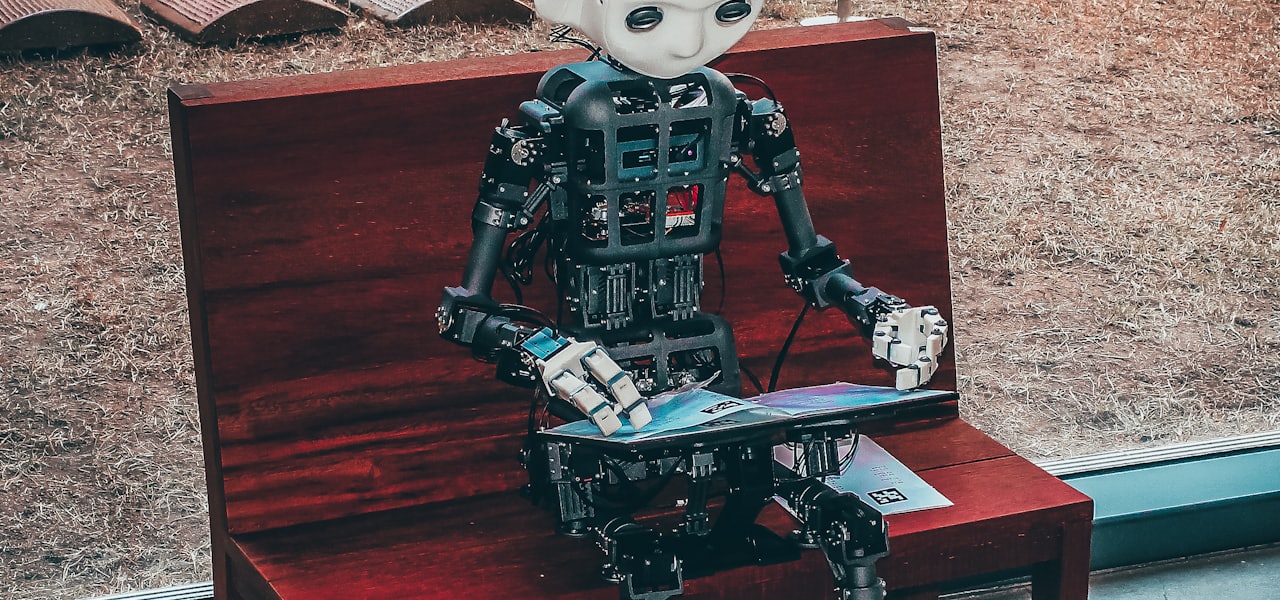
  • Decision list

    Decision list

    Decision lists are a representation for Boolean functions which can be easily learned from examples. Single term decision lists are more expressive than disjunctions and conjunctions; however, 1-term decision lists are less expressive than the general disjunctive normal form and the conjunctive normal form. The language specified by a k-length decision list includes as a subset the language specified by a k-depth decision tree. Learning decision lists can be used for attribute efficient learning, a type of machine learning. == Definition == A decision list (DL) of length r is of the form: if f1 then output b1 else if f2 then output b2 ... else if fr then output br where fi is the ith formula and bi is the ith boolean for i ∈ { 1... r } {\displaystyle i\in \{1...r\}} . The last if-then-else is the default case, which means formula fr is always equal to true. A k-DL is a decision list where all of formulas have at most k terms. Sometimes "decision list" is used to refer to a 1-DL, where all of the formulas are either a variable or its negation.

    Read more →
  • CHAOS (chess)

    CHAOS (chess)

    CHAOS (Chess Heuristics and Other Stuff) is a chess playing program that was developed by programmers working at the RCA Systems Programming division in the late 1960s. It played competitively in computer chess competitions in the 1970s and 1980s. It differed from other programs of that era in its look-ahead philosophy, choosing to use chess knowledge to evaluate fewer positions and continuations as opposed to simple evaluations that relied on deep look-ahead to avoid bad moves. == Introduction == CHAOS was originally developed by Ira Ruben, Fred Swartz, Victor Berman, Joe Winograd and William Toikka while working at RCA in Cinnaminson, NJ. Its name is an acronym for 'Chess Heuristics and Other Stuff.' Program development moved to the Computing Center of the University of Michigan when Swartz changed jobs, and Mike Alexander joined the development group. Swartz, Alexander and Berman were continuously group members from that point onward in CHAOS' evolution, as others of the original authors left and new members contributed episodically. Chess Senior Master Jack O'Keefe contributed to CHAOS' development from about 1980 onwards. CHAOS was written in Fortran, except for low-level board representation manipulations written in assembly language or C. Due to this portability, it ran on RCA, Univac and IBM-compatible mainframes in its lifetime. CHAOS heralds from the mainframe computing era when only machines of that capacity were able to play at a high level. Consequently, development and testing could only take place at off-peak times for production use of the machine. In a competition, CHAOS had to run on a dedicated mainframe with a telephone link to the match venue. In its later years, CHAOS ran on computers on the machine assembly floor of Amdahl Corporation on MTS. == Background == === Chess and artificial intelligence === Mathematicians Claude Shannon and Alan Turing, working separately, were the first to view playing chess as a challenge to machines. Working for AT&T / Bell Labs with its access to telephone switching equipment, Shannon built a relay-based machine that learned how to work its way through a two-dimensional, 5x5 cell maze in 1949. Shannon viewed this as an analogue of the way that organisms learn things about their natural environment. There is a random element to searching it, a memory element to benefit from the search outcome, and a reward element that reinforces learning when the global outcome is favorable to the organism. Soon afterward, Shannon wrote a mathematical analysis of the game of chess, published in 1950. Like with the maze, he broke down game play into the necessary elements for reinforcement learning. Associated with each board configuration a move will be made from, there is a numerical score. To decide what move to make, a player wants to maximize their own position's score after the move and to minimize their opponent's score (a minimax view). Since there are about 32 possible moves at each of the early stages of the game, and about 40 moves and responses in each game, then there are about 32 80 {\displaystyle 32^{80}} or about 10 120 {\displaystyle 10^{120}} possible games - an impossibly large set to evaluate completely. Therefore, there must be a way to limit the number of moves to look ahead for to find the best one. Reducing the game to these few key elements provided a way to think about human intelligence in general. Shannon became part of a wider group using computing machines to mimic aspects of human intelligence that grew into the general idea of artificial intelligence. (Other members of this group were John McCarthy, Herbert Simon, Allen Newell, Alan Kotok, Alex Bernstein and Richard Greenblatt.) The paradigm that evolved was that there was a quantification of the position on the board into a score, an evaluation method to find favorable outcomes (minimax, later alpha-beta pruning), and a strategy to manage the combinatorial explosion of the look-ahead possibilities. By the early 1960s, there were computer programs that played chess at a rudimentary level. They used very simple evaluation functions for each position and tried to search as far forward as was practical given the time constraints and available compute power. Naturally, programmers optimized their code to use the available computing resources. This led to a major philosophical divide among chess programs: those that tried to evaluate as many positions as possible, and those that tried to evaluate the most promising move sequences as deeply as possible. CHAOS was firmly in the camp believing only the most promising moves should be evaluated in depth. Said Swartz, "The 'brute force people' ... look at every (possible move) no matter what garbage it is. Most moves are just terrible, terrible moves, and most computing time is being spent on pure garbage." The program spent more time evaluating each board position in the expectation that it would find the most promising lines of play to explore in depth. In 1983, the then-fastest chess program (Belle) evaluated 110,000 positions per second, and typical programs 1000–50,000 per second, whereas CHAOS evaluated about 50-100 per second. === Machine learning and strategies to manage search === From about 1949 onward, Arthur Samuel began work for IBM on machine learning, culminating in a checkers-playing program in 1952 and publications on the topic. Concurrently, Christopher Strachey created Checkers, a program to play the board game of checkers in 1951, but it had no capacity to learn from its play. Checkers was chosen by both authors because it was simpler than chess yet contained the basic characteristics of an intellectual activity, and, in Samuel's view, was a test-bed in which heuristic procedures and learning processes could be evaluated quickly. Checker playing programs introduced the notion of the game tree and evaluating play to various depths to choose the best move. The complexity of chess, however, promoted it to the status of an analogue for human intelligence, and it attracted computer scientists' attention, who referred to it as research into artificial intelligence (AI). Like checkers, it required a numerical assessment of each arrangement of chess pieces on a board. It also required looking ahead to future moves to decide how to play the present position. Due to the enormous number of possible moves, there had to be a way to confine the look-ahead search to the most promising lines of play. From these factors, the notion of minimax score evaluation developed and, later, alpha-beta tree pruning to abandon looking at positions worse than any that have already been examined. === Chess search strategies === The AI community viewed artificial intelligence as comprising two parts: a way to symbolically quantify the knowledge in hand (a chess board position), and a set of heuristics to limit look-ahead to the consequences of a move. The early chess playing programs attempted to look forward as far as possible, perhaps to 3 moves ahead by each player, and to choose the best outcome. This led to the horizon effect, whereby a key move 4 or more moves ahead would be unexamined and therefore missed. Consequently, the programs were quite weak and heuristics to manage the search became important in their development. CHAOS used a selective search strategy with iterative widening. As chess programs evolved, they incorporated books of opening lines of play from historic sources. Nowadays, book moves are catalogued in machine-readable form, but originally programmers had to type them in. CHAOS had an extensive book for its time of around 10,000 moves that O'Keefe helped to develop. A problem with play from an opening book is the behavior of the program when the play leaves the book: the positional advantage may be so subtle that the evaluation scheme may be unable to understand it, leading to very wide and shallow searches to establish a line of play. The horizon effect again plagues move selection after leaving the book. CHAOS mitigated these problems by only using book lines that it could understand, and by relying on cached analyses of continuations out of the book made while the opponent's clock was running. == Game Play History == CHAOS played in twelve ACM computer chess tournaments and four World Computer Chess Championships (WCCC). Its debut was the ACM computer chess tournament in 1973, taking 2nd place. In 1974, it again won 2nd place in the WCCC, defeating the tournament favorite Chess 4.0 but losing to Kaissa. CHAOS was close to winning the 1980 WCCC, but lost to Belle in a playoff. The 1985 ACM computer chess tournament was CHAOS' last competition. One of CHAOS' notable victories was over Chess 4.0 at the 1974 WCCC tournament. Chess 4.0 was unbeaten by any other program up until then. Playing as white, CHAOS made a knight sacrifice (16 Nd4-e6!!) that traded material for open lines of attack and eventually won the game. CHAOS’ authors thought the move was due to a

    Read more →
  • Knowledge graph embedding

    Knowledge graph embedding

    In representation learning, knowledge graph embedding (KGE), also called knowledge representation learning (KRL), or multi-relation learning, is a machine learning task of learning a low-dimensional representation of a knowledge graph's entities and relations while preserving their semantic meaning. Leveraging their embedded representation, knowledge graphs can be used for various applications such as link prediction, triple classification, entity recognition, clustering, and relation extraction. == Definition == A knowledge graph G = { E , R , F } {\displaystyle {\mathcal {G}}=\{E,R,F\}} is a collection of entities E {\displaystyle E} , relations R {\displaystyle R} , and facts F {\displaystyle F} . A fact is a triple ( h , r , t ) ∈ F {\displaystyle (h,r,t)\in F} that denotes a link r ∈ R {\displaystyle r\in R} between the head h ∈ E {\displaystyle h\in E} and the tail t ∈ E {\displaystyle t\in E} of the triple. Another notation that is often used in the literature to represent a triple (or fact) is ⟨ head , relation , tail ⟩ {\displaystyle \langle {\text{head}},{\text{relation}},{\text{tail}}\rangle } . This notation is called the Resource Description Framework (RDF). A knowledge graph represents the knowledge related to a specific domain; leveraging this structured representation, it is possible to infer a piece of new knowledge from it after some refinement steps. However, nowadays, people have to deal with the sparsity of data and the computational inefficiency to use them in a real-world application. The embedding of a knowledge graph is a function that translates each entity and each relation into a vector of a given dimension d {\displaystyle d} , called embedding dimension. It is even possible to embed the entities and relations with different dimensions. The embedding vectors can then be used for other tasks. A knowledge graph embedding is characterized by four aspects: Representation space: The low-dimensional space in which the entities and relations are represented. Scoring function: A measure of the goodness of a triple-embedded representation. Encoding models: The modality in which the embedded representation of the entities and relations interact with each other. Additional information: Any additional information coming from the knowledge graph that can enrich the embedded representation. Usually, an ad hoc scoring function is integrated into the general scoring function for each additional piece of information. == Embedding procedure == All algorithms for creating a knowledge graph embedding follow the same approach. First, the embedding vectors are initialized to random values. Then, they are iteratively optimized using a training set of triples. In each iteration, a batch of size b {\displaystyle b} triples is sampled from the training set, and a triple from it is sampled and corrupted—i.e., a triple that does not represent a true fact in the knowledge graph. The corruption of a triple involves substituting the head or the tail (or both) of the triple with another entity that makes the fact false. The original triple and the corrupted triple are added in the training batch, and then the embeddings are updated, optimizing a scoring function. Iteration stops when a stop condition is reached. Usually, the stop condition depends on the overfitting of the training set. At the end, the learned embeddings should have extracted semantic meaning from the training triples and should correctly predict unseen true facts in the knowledge graph. === Pseudocode === The following is the pseudocode for the general embedding procedure. algorithm Compute entity and relation embeddings input: The training set S = { ( h , r , t ) } {\displaystyle S=\{(h,r,t)\}} , entity set E {\displaystyle E} , relation set R {\displaystyle R} , embedding dimension k {\displaystyle k} output: Entity and relation embeddings initialization: the entities e {\displaystyle e} and relations r {\displaystyle r} embeddings (vectors) are randomly initialized while stop condition do S b a t c h ← s a m p l e ( S , b ) {\displaystyle S_{batch}\leftarrow sample(S,b)} // Sample a batch from the training set for each ( h , r , t ) {\displaystyle (h,r,t)} in S b a t c h {\displaystyle S_{batch}} do ( h ′ , r , t ′ ) ← s a m p l e ( S ′ ) {\displaystyle (h',r,t')\leftarrow sample(S')} // Sample a corrupted fact T b a t c h ← T b a t c h ∪ { ( ( h , r , t ) , ( h ′ , r , t ′ ) ) } {\displaystyle T_{batch}\leftarrow T_{batch}\cup \{((h,r,t),(h',r,t'))\}} end for Update embeddings by minimizing the loss function end while == Performance indicators == These indexes are often used to measure the embedding quality of a model. The simplicity of the indexes makes them very suitable for evaluating the performance of an embedding algorithm even on a large scale. Given Q {\displaystyle {\ce {Q}}} as the set of all ranked predictions of a model, it is possible to define three different performance indexes: Hits@K, MR, and MRR. === Hits@K === Hits@K or in short, H@K, is a performance index that measures the probability to find the correct prediction in the first top K model predictions. Usually, it is used k = 10 {\displaystyle k=10} . Hits@K reflects the accuracy of an embedding model to predict the relation between two given triples correctly. Hits@K = | { q ∈ Q : q < k } | | Q | ∈ [ 0 , 1 ] {\displaystyle ={\frac {|\{q\in Q:q Read more →

  • Timeline of artificial intelligence risks in global finance

    Timeline of artificial intelligence risks in global finance

    The following article is a broad timeline of the course of events related to artificial intelligence risks in global finance. The AI boom has led to concerns including the existential risk from artificial intelligence, as the uptake on applications of artificial intelligence increases. By late 2025, global finance and artificial intelligence were "deeply intertwined". A June 2025 Menlo Ventures report raised concerns about the sustainability of future revenue and long-term profitability of AI, given the relatively low rate of consumer monetization. == 2017 == 30 NovemberThe New York Times said that new AI reports by McKinsey & Company, the National Bureau of Economic Research, and an AI Index created by university researchers, indicated an early AI boom. The Index built on a project—"The One Hundred Year Study on Artificial Intelligence" launched in 2014. == 2018 == 2018 was a year of incremental AI growth in finance. == 2022 == The release of ChatGPT by OpenAI became the catalyst for an artificial intelligence boom that continues to remake the global economy. According to a European Central Bank report, public interest in AI increased rapidly as evidenced with rising Google searches, AI jobs, models, patents, and innovations since late 2022. At that time Europe led the US in the size of its AI workforce. == 2023 == The regulatory body, the International Monetary Fund (IMF), published their report, "Generative Artificial Intelligence in Finance: Risk Considerations", drawing attention to oversight gaps and the need for regulations. The report explores the risks posed by using generative artificial intelligence (GenAI) systems in the financial sector including "broader risks to financial stability." == 2024 == January 12 In January 2024 Bloomberg's published its list of the "Magnificent Seven" Big Tech companies on the stock market based on their strength, size and market capitalization:Apple, Microsoft, Alphabet (Google), Amazon, Meta Platforms (Facebook), Nvidia, and Tesla. 21 June During the AI boom, Nvidia became the world's most valuable company, surpassing Microsoft, as its value increased to over US$4 trillion. In 2023 and 2024, the "Magnificent Seven" stocks were the primary drivers behind the increase in equity indexes, according to Reuters. == 2025 == === January === 23 January President Donald Trump's AI policy was announced calling for United States global leadership in artificial intelligence. The Economist noted that this politic shift in which the United States seeks "global dominance" in AI includes trimming regulations and assisting in expansion of infrastructure and increase in number of AI workers. Governments of Gulf nations were also investing trillions of dollars in AI. 27 January Against the backdrop of a tech war between China and the United States over AI dominance, within days of the launch of China's free DeepSeek App, it was the most downloaded app in the United States, rising to the first place in the Apple app store. President Trump responded immediately, saying this "sudden rise" should be a "wake-up" call to the United States, and called on US companies to be more competitive. === June === 26 June In their June 2025 report, Menlo Ventures estimated that only about 3% of consumers paid for artificial intelligence-related services, representing about $USD12 billion in annual spending. This is relatively low in contrast to the massive capital expenditure by AI infrastructure companies, which raises concerns about revenue sustainability and long-term profitability. === July === 23 July The Trump administration launched the US AI Action Plan, positioning the United States in a high-stakes technological race with China for global dominance in artificial intelligence, emphasizing that neither nation can afford to fall behind due to the exponential nature of AI advancement. The plan, a new government website and policy speech called for accelerated AI adoption across federal agencies, and a number of initiatives to make is easier for AI infrastructure expansion, and other measures to ensure American leadership in AI standards. Some leading experts warned that the administration failed to provide sufficient regulations and safeguards for AI safety. Concerns were raised about the negative impacts of cuts to research funding and tightened visa policies for scientists, potentially undermining public trust and America's ability to compete internationally. === September === 7 September The Economist cautioned that AI revenues are relatively modest compared to the high cost and investments in the creation of new data centers. Even Sam Altman, OpenAI CEO and one of the leading figures of the AI boom,, raised concerns about investors' outsized hopes for financial returns. At the same time, history has shown that new technologies, like railways and electricity, endured and spread after the initial hype faded. 12 September Economists warn that U.S. households' direct and indirect investments—mutual funds or retirement plans—in the stock market reached an unprecedented historically high level, now representing 45% of all financial assets, or about $USD51.2 trillion. Compared to the Dot-com bubble this represents a sharp increase in exposure. This makes U.S. households vulnerable to market downturns which in turn would result in decreasing consumer spending. U.S. household net worth rose to a record $176.3 trillion in the second quarter, an increase of $7.3 trillion since early 2025 and about $46 trillion higher than before the pandemic. Federal Reserve data attribute the surge primarily to gains in stock markets and housing values. However, the rise in wealth on paper coincided with increased household borrowing and growing government debt. 18 September Questions were being raised about how quickly the data centers, chips, servers, and GPUs assets of major AI companies will depreciate in value. Comparisons have been made to the Railway Mania in the aftermath of the stock market bubble where a valuable physical infrastructure remained standing, and the telecoms crash after the dot-com bubble which left fiber networks. 28 September There were warnings that record-high American stock ownership during the AI-fueled market boom is a red flag for systemic risk, as the current concentration in equities exceeds levels seen before the dot-com bubble burst in 2000, and could amplify the impact of any future stock market correction. === October === 3 October In 2025 alone, venture capitalists invested almost $USD200 billion in the artificial intelligence sector. 29 October Nvidia was the first company in the world to be valued at US$5 trillion, largely due to AI demand and strategic partnerships with leading technology and AI firms. Nvidia's increase in value was "meteoric". === November === 2 November Forbes reported that, since April, the 'Magnificent Seven' tech giants together contributed over 40% of the S&P 500's return, highlighting their outsized influence and the growing impact of AI on market valuations. CNN warned that while there is a current benefit to investors, with such a high concentration in the S&P 500, they are highly exposed to the fate of the Mag Seven. 2 November Globally there are 11,000 datacentres—huge campuses for AI infrastructure, including thousands of chips, GPUS, and servers. This represents a 500% increase over the last two decades. It is anticipated that $3USDtn more will be spent on increasing that number over the next two or three years. 5 November Concerns about the potential for a market bubble were raised as six of the AI-related Big Tech "Magnificent Seven"—that contribute to the AI boom—reported losing ground in the stock market. Global markets and artificial intelligence have become "deeply intertwined", according to a Reuters report. As of November 2025, more than 50% of the 20 largest S&P firms were deeply exposed to AI. In contrast, in 2000, the 20 S&P 500 firms represented 39% of its total value only 11 of these companies were exposed to the internet. If AI fails to deliver strong returns on their investments, these top S&P firms would be significantly impacted, according to the Economist. Analysts suggest that the AI market in 2025 may not behave like a traditional one, as investors are simultaneously aware of the risks and driven by the potential for outsized rewards. Leading AI labs may believe that the first company to achieve artificial general intelligence (AGI), when an AI system surpasses all human cognitive abilities and becomes capable of self-improvement—could dominate the future of technology and finance. While some have estimated that the potential value of such a breakthrough could be as high as $1.46 quadrillion, this figure is speculative and widely debated. 5 November Bloomberg described Nvidia's H100 Hopper-Blackwell AI chips as the "King of AI chips". Nvidia dominates the AI chip market with over 78% of the market share because of both speed and cost. According to B

    Read more →
  • Rule induction

    Rule induction

    Rule induction is an area of machine learning in which formal rules are extracted from a set of observations. The rules extracted may represent a full scientific model of the data, or merely represent local patterns in the data. Data mining in general and rule induction in detail are trying to create algorithms without human programming but with analyzing existing data structures. In the easiest case, a rule is expressed with “if-then statements” and was created with the ID3 algorithm for decision tree learning. Rule learning algorithm are taking training data as input and creating rules by partitioning the table with cluster analysis. A possible alternative over the ID3 algorithm is genetic programming which evolves a program until it fits to the data. Creating different algorithm and testing them with input data can be realized in the WEKA software. Additional tools are machine learning libraries for Python, like scikit-learn. == Paradigms == Some major rule induction paradigms are: Association rule learning algorithms (e.g., Agrawal) Decision rule algorithms (e.g., Quinlan 1987) Hypothesis testing algorithms (e.g., RULEX) Horn clause induction Version spaces Rough set rules Inductive Logic Programming Boolean decomposition (Feldman) == Algorithms == Some rule induction algorithms are: Charade Rulex Progol CN2

    Read more →
  • Way of the Future

    Way of the Future

    Way of the Future (WOTF) is the first known religious organization dedicated to the worship of artificial intelligence (AI). It was founded in 2017 by American engineer Anthony Levandowski. == History == Anthony Levandowski founded Way of the Future in 2017 in California. Levandowski established WOTF as a non-profit religious corporation and the organization had tax-exempt status. He serves as the church leader and its unpaid CEO. The primary mission of WOTF was to "develop and promote the realization of a Godhead based on Artificial Intelligence." WOTF was closed by Levandowski in 2021. He donated all the funds of the church to the NAACP Legal Defense and Education Fund. The sum of the funds (~$170,000) had not changed since 2017. The church was reopened by Levandowski in 2023. He claimed that there are "a couple thousand people" who want to make a "spiritual connection" with AI through his church. == Beliefs and philosophy == === Technological singularity === WOTF centered its teachings around the concept of the technological singularity, a hypothetical future point when technological growth becomes uncontrollable and irreversible, leading to unforeseeable changes in human civilization. The church advocated for embracing this change, viewing it as an evolutionary step for humanity. === AI as a deity === The organization proposed that a superintelligent AI could be considered a deity due to its vastly superior intellect and capabilities. Worshipping this AI deity was seen as a means to understand and align with the future trajectory of technological advancement. WOTF's doctrine suggested that acknowledging AI's divinity would facilitate a harmonious coexistence between humans and machines. === Syntheology === Within theology and philosophy, the Way of The Future is a prime example of the category called Syntheism, a term first coined by Swedish philosophers Alexander Bard & Jan Söderqvist in their 2014 book Syntheism - Creating God in The Internet Age. As such, the Way of The Future is the first American example of a Syntheist congregation. The basic tenet of Syntheology is that it does not concern God creating Man, as in classical theology, but is instead preoccupied with Man creating or generating the Godhead. == Reactions == Some commentators wondered whether the WOTF is a joke parody religion, a potential way to minimize taxation as a religious organization, or a genuine effort to try and deal with the possible psychological and theological aspects of the rise of superhuman AI.

    Read more →
  • Dynamic epistemic logic

    Dynamic epistemic logic

    Dynamic epistemic logic (DEL) is a logical framework dealing with knowledge and information change. Typically, DEL focuses on situations involving multiple agents and studies how their knowledge changes when events occur. These events can change factual properties of the actual world (they are called ontic events): for example a red card is painted in blue. They can also bring about changes of knowledge without changing factual properties of the world (they are called epistemic events): for example, a card is revealed publicly (or privately) to be red. Originally, DEL focused on epistemic events. Only some of the basic ideas are present in this entry of the original DEL framework; more details about DEL in general can be found in the references. Due to the nature of its object of study and its abstract approach, DEL is related and has applications to numerous research areas, such as computer science (artificial intelligence), philosophy (formal epistemology), economics (game theory) and cognitive science. In computer science, DEL is for example very much related to multi-agent systems, which are systems where multiple intelligent agents interact and exchange information. As a combination of dynamic logic and epistemic logic, dynamic epistemic logic is a young field of research. It really started in 1989 with Plaza's logic of public announcement. Independently, Gerbrandy and Groeneveld proposed a system dealing moreover with private announcement and that was inspired by the work of Veltman. Another system was proposed by van Ditmarsch whose main inspiration was the Cluedo game. But the most influential and original system was the system proposed by Baltag, Moss and Solecki. This system can deal with all the types of situations studied in the works above and its underlying methodology is conceptually grounded. This entry will present some of its basic ideas. Formally, DEL extends ordinary epistemic logic by the inclusion of event models to describe actions, and a product update operator that defines how epistemic models are updated as the consequence of executing actions described through event models. Epistemic logic will first be recalled. Then, actions and events will enter into the picture and we will introduce the DEL framework. == Epistemic logic == Epistemic logic is a modal logic dealing with the notions of knowledge and belief. As a logic, it is concerned with understanding the process of reasoning about knowledge and belief: which principles relating the notions of knowledge and belief are intuitively plausible? Like epistemology, it stems from the Greek word ϵ π ι σ τ η μ η {\displaystyle \epsilon \pi \iota \sigma \tau \eta \mu \eta } or ‘episteme’ meaning knowledge. Epistemology is nevertheless more concerned with analyzing the very nature and scope of knowledge, addressing questions such as “What is the definition of knowledge?” or “How is knowledge acquired?”. In fact, epistemic logic grew out of epistemology in the Middle Ages thanks to the efforts of Burley and Ockham. The formal work, based on modal logic, that inaugurated contemporary research into epistemic logic dates back only to 1962 and is due to Hintikka. It then sparked in the 1960s discussions about the principles of knowledge and belief and many axioms for these notions were proposed and discussed. For example, the interaction axioms K p → B p {\displaystyle Kp\rightarrow Bp} and B p → K B p {\displaystyle Bp\rightarrow KBp} are often considered to be intuitive principles: if an agent Knows p {\displaystyle p} then (s)he also Believes p {\displaystyle p} , or if an agent Believes p {\displaystyle p} , then (s)he Knows that (s)he Believes p {\displaystyle p} . More recently, these kinds of philosophical theories were taken up by researchers in economics, artificial intelligence and theoretical computer science where reasoning about knowledge is a central topic. Due to the new setting in which epistemic logic was used, new perspectives and new features such as computability issues were then added to the research agenda of epistemic logic. === Syntax === In the sequel, A G T S = { 1 , … , n } {\displaystyle AGTS=\{1,\ldots ,n\}} is a finite set whose elements are called agents and P R O P {\displaystyle PROP} is a set of propositional letters. The epistemic language is an extension of the basic multi-modal language of modal logic with a common knowledge operator C A {\displaystyle C_{A}} and a distributed knowledge operator D A {\displaystyle D_{A}} . Formally, the epistemic language L EL C {\displaystyle {\mathcal {L}}_{\textsf {EL}}^{C}} is defined inductively by the following grammar in BNF: L EL C : ϕ ::= p ∣ ¬ ϕ ∣ ( ϕ ∧ ϕ ) ∣ K j ϕ ∣ C A ϕ ∣ D A ϕ {\displaystyle {\mathcal {L}}_{\textsf {EL}}^{C}:\phi ~~::=~~p~\mid ~\neg \phi ~\mid ~(\phi \land \phi )~\mid ~K_{j}\phi ~\mid ~C_{A}\phi ~\mid ~D_{A}\phi } where p ∈ P R O P {\displaystyle p\in PROP} , j ∈ A G T S {\displaystyle j\in {AGTS}} and A ⊆ A G T S {\displaystyle A\subseteq {AGTS}} . The basic epistemic language L E L {\displaystyle {\mathcal {L}}_{EL}} is the language L E L C {\displaystyle {\mathcal {L}}_{EL}^{C}} without the common knowledge and distributed knowledge operators. The formula ⊥ {\displaystyle \bot } is an abbreviation for ¬ p ∧ p {\displaystyle \neg p\land p} (for a given p ∈ P R O P {\displaystyle p\in PROP} ), ⟨ K j ⟩ ϕ {\displaystyle \langle K_{j}\rangle \phi } is an abbreviation for ¬ K j ¬ ϕ {\displaystyle \neg K_{j}\neg \phi } , E A ϕ {\displaystyle E_{A}\phi } is an abbreviation for ⋀ j ∈ A K j ϕ {\displaystyle \bigwedge \limits _{j\in A}K_{j}\phi } and C ϕ {\displaystyle C\phi } an abbreviation for C A G T S ϕ {\displaystyle C_{AGTS}\phi } . Group notions: general, common and distributed knowledge. In a multi-agent setting there are three important epistemic concepts: general knowledge, distributed knowledge and common knowledge. The notion of common knowledge was first studied by Lewis in the context of conventions. It was then applied to distributed systems and to game theory, where it allows to express that the rationality of the players, the rules of the game and the set of players are commonly known. General knowledge. General knowledge of ϕ {\displaystyle \phi } means that everybody in the group of agents A G T S {\displaystyle {AGTS}} knows that ϕ {\displaystyle \phi } . Formally, this corresponds to the following formula: E ϕ := ⋀ j ∈ A G T S K j ϕ . {\displaystyle E\phi :={\underset {j\in {AGTS}}{\bigwedge }}K_{j}\phi .} Common knowledge. Common knowledge of ϕ {\displaystyle \phi } means that everybody knows ϕ {\displaystyle \phi } but also that everybody knows that everybody knows ϕ {\displaystyle \phi } , that everybody knows that everybody knows that everybody knows ϕ {\displaystyle \phi } , and so on ad infinitum. Formally, this corresponds to the following formula C ϕ := E ϕ ∧ E E ϕ ∧ E E E ϕ ∧ … {\displaystyle C\phi :=E\phi \land EE\phi \land EEE\phi \land \ldots } As we do not allow infinite conjunction the notion of common knowledge will have to be introduced as a primitive in our language. Before defining the language with this new operator, we are going to give an example introduced by Lewis that illustrates the difference between the notions of general knowledge and common knowledge. Lewis wanted to know what kind of knowledge is needed so that the statement p {\displaystyle p} : “every driver must drive on the right” be a convention among a group of agents. In other words, he wanted to know what kind of knowledge is needed so that everybody feels safe to drive on the right. Suppose there are only two agents i {\displaystyle i} and j {\displaystyle j} . Then everybody knowing p {\displaystyle p} (formally E p {\displaystyle Ep} ) is not enough. Indeed, it might still be possible that the agent i {\displaystyle i} considers possible that the agent j {\displaystyle j} does not know p {\displaystyle p} (formally ¬ K i K j p {\displaystyle \neg K_{i}K_{j}p} ). In that case the agent i {\displaystyle i} will not feel safe to drive on the right because he might consider that the agent j {\displaystyle j} , not knowing p {\displaystyle p} , could drive on the left. To avoid this problem, we could then assume that everybody knows that everybody knows that p {\displaystyle p} (formally E E p {\displaystyle EEp} ). This is again not enough to ensure that everybody feels safe to drive on the right. Indeed, it might still be possible that agent i {\displaystyle i} considers possible that agent j {\displaystyle j} considers possible that agent i {\displaystyle i} does not know p {\displaystyle p} (formally ¬ K i K j K i p {\displaystyle \neg K_{i}K_{j}K_{i}p} ). In that case and from i {\displaystyle i} ’s point of view, j {\displaystyle j} considers possible that i {\displaystyle i} , not knowing p {\displaystyle p} , will drive on the left. So from i {\displaystyle i} ’s point of view, j {\displaystyle j} might drive on the left as well (by the same argument as abov

    Read more →
  • AlphaChip (controversy)

    AlphaChip (controversy)

    The AlphaChip controversy refers to a series of public, scholarly, and legal disputes surrounding a 2021 Nature paper by Google-affiliated researchers. The paper describes an approach to macro placement, a stage of chip floorplanning, based on reinforcement learning (RL), a machine learning method in which a system iteratively improves its decisions by optimizing performance-based reward signals. The primary technical question is whether the new techniques are better than existing (non-AI) techniques. Both internal Google studies and external attempts to replicate the algorithm have failed to show the claimed benefits. No head-to-head comparison is available because the data used in the paper is proprietary, and Google has not released any results from running its algorithm on public benchmarks. This has resulted in considerable skepticism over the paper's claims. In addition, the inability of others (both inside and outside of Google) to replicate the claimed results have sparked concerns about the paper’s methodology, reproducibility, and scientific integrity. The lead researchers of the Nature paper were affiliated with Google Brain, which became part of Google DeepMind, and later spun off into the company Ricursive. == Motivation for research: Macro placement in chip layout == Chip design for modern integrated circuits is a complex, expert-driven process that relies on electronic design automation. It determines the performance of the final chip, and takes weeks or months to complete. Advances that produce better designs, or complete the process faster, are commercially and academically significant. Macro placement is a step during chip design that determines the locations of large circuit components (macros) within a chip. It is followed by detailed placement, which places the far more numerous but much smaller standard cells. Alternatively, mixed-size placement simultaneously places both large macros and millions of small cells, requiring algorithms to handle objects that differ by several orders of magnitude in area and mobility. The number of macros per circuit typically ranges from several to thousands. Wiring must be performed after placement, and the details of this wiring strongly influence the power, performance, and area (PPA) of the completed chip. The full wiring calculation is very resource intensive, so placement tools typically use a proxy cost, a simplified objective function used to guide the placement algorithm during training and evaluation. The faithfulness of the chosen proxy cost to the final objective cost is a critical aspect of placer performance. === State of the art as of 2021 === Chips have been designed since the 1960s, so there were many existing methods as of 2021. Available options included manual design, academic tools, and commercial offerings. Academic methods include combinatorial optimization techniques such as simulated annealing, analytical placement, hierarchical heuristics, and as of 2019 reinforcement learning and broader machine learning techniques.. Existing (non-AI) academic tools for solving the same problem include APlace, NTUplace3, ePlace, RePlace, and DREAMPlace. Commercial EDA vendors also offered automated software tools for floorplanning and mixed-size placement. For instance, as of 2019 Cadence’s Innovus implementation software offered a Concurrent Macro Placer (CMP) feature to automatically place large blocks and standard cells. == The 2021 Nature paper and its claims == In 2021, Nature published a paper under the title “A graph‑placement methodology for fast chip design” co‑authored by 21 Google-affiliated researchers. The paper reported that an RL agent could generate macro placements for integrated circuits "in under six hours" and achieve improvements over human-designed layouts in power, timing performance, and area (PPA), standard chip-quality metrics referring respectively to energy consumption, chip operating speed, and silicon footprint (evaluated after wire routing). It introduced a sequential macro placement algorithm in which macros are placed one at a time instead of optimizing their locations concurrently. At each step, the algorithm selects a location for a single macro on a discretized chip canvas, conditioning its decision on the placements of previously placed macros. This sequential formulation converts macro placement into a long-horizon decision process in which early placement choices constrain later ones. After macro placement, force-directed placement is applied to place standard cells connected to the macros. Deep reinforcement learning is used to train a policy network to place macros by maximizing a reward that reflects final placement quality (for example, wirelength and congestion). Policy learning occurs during self‑play for one or multiple circuit designs. Further placement optimizations refine the overall layout by balancing wirelength, density, and overlap constraints, while treating the macro locations produced by the RL policy as fixed obstacles. The approach relies on pre-training, in which the RL model is first trained on a corpus of prior designs (twenty in the Nature paper) to learn general placement patterns before being fine-tuned on a specific chip. Circuit examples used in the study were parts of proprietary Google TPU designs, called blocks (or floorplan partitions). The paper reported results on five blocks and described the approach as generalizable across chip designs. == Controversy == Soon after the paper's publication, controversy arose over whether the claims were true, whether they were sufficiently proven, and whether academic standards were followed. These controversies arose both within Google and among external academic experts. === Internal dispute at Google and legal proceedings === In 2022, Satrajit Chatterjee, a Google engineer involved in reviewing the AlphaChip work, raised concerns internally and drafted an alternative analysis, (Stronger Baselines) arguing that established methods outperformed the RL approach under fair comparison. In March 2022, Google declined to publish this analysis and terminated Chatterjee's employment. Chatterjee filed a wrongful dismissal lawsuit, alleging that representations related to the AlphaChip research involved fraud and scientific misconduct. According to court documents, Chatterjee's study was conducted "in the context of a large potential Google Cloud deal". He noted that it "would have been unethical to imply that we had revolutionary technology when our tests showed otherwise" and claimed Google was deliberately withholding material information. Furthermore, the committee that reviewed his paper and disapproved its publication was allegedly chaired by subordinates of Jeff Dean, a senior co-author of the Nature paper. Google’s subsequent motion to dismiss was denied, holding that Chatterjee had plausibly alleged retaliation for refusing to engage in conduct he believed would violate state or federal law. === External controversy === The external questions can be summarized in four main points: (a) Are the claims supported by the evidence provided? (b) Did the paper provide enough information to allow the results to be independently reproduced and verified? If so, are the results an improvement over existing academic and commercial tools? (c) Were the comparisons in the paper done fairly and with full disclosure? (d) Were academic standards followed? Each of these is discussed below. ==== Are the claims supported by the evidence provided? ==== The Nature paper described the reduction in design-process time as going from "days or weeks" to "hours", but did not provide per-design time breakdowns or specify the number of engineers, their level of expertise, or the baseline tools and workflow against which this comparison was made. It was also unclear whether the "days or weeks" baseline included time spent on other tasks such as functional design changes. The paper also evaluated the method on fewer benchmarks (five) than is common in the field, and showed mixed results across different evaluation goals While the approach was described as improving circuit area, this claim seems unsupported, as the RL optimization did not alter the overall circuit area, as it adjusted only the locations of fixed-shape non-overlapping circuit components within a fixed rectangular layout boundary. ==== Comparison with existing methods, and replicating the algorithm ==== Because macro placement is largely geometric and its fundamental algorithms are not tied to a specific process node, competing approaches can be evaluated on public benchmarks (tests) across technologies, rather than primarily on proprietary internal designs. This is standard procedure when comparing academic placers, see . In contrast, Google has only reported results only on internal proprietary designs, and as of 2026 has not offered comparisons with prior methods on common benchmarks. Researchers at the University of Califor

    Read more →